
Category: 2024

  • 4th Quarter 2024

    OUR QUARTERLY NEWSLETTER TO CLIENTS AND FRIENDS OF THE FIRM

    FOURTH QUARTER 2024


    2024 Year in Review

    There are few times more difficult to be a good long-term investor than when times are really great. The riskiest assets look extremely enticing, and investing in general looks all too easy. On the other side of the coin, in a crisis, investors in risky assets run for the hills while the diversified investor sees opportunities. Not dissimilar from the tortoise and the hare, the hare looks great when times are good but the tortoise wins the race in the end.

    More times than not the market gives us extremes, and these extremes test our discipline. Investors find themselves asking, “Things are really great, will this keep going?” Or, “Things are awful, how long can this last?” The S&P 500 reached a new all-time high 61 times last year; if that isn’t an extreme, I don’t know what is. Many things contributed to this record-breaking year, but a few of the major themes involve the Fed’s soft landing going according to plan, the market’s outlook regarding the election, and the optimism surrounding Artificial Intelligence creating a near perfect mix that delivered double-digit US stock returns.

    KEY TAKEAWAYS

    • US Stocks led the market in 2024, but their elevated valuations and reliance on the Magnificent 7 raise concerns about the sustainability of these returns.

    • International and Emerging Stocks delivered solid local currency returns but were held back by the strength of the US dollar.
    • Private Investments outperformed in the fixed income category, but returns were relatively muted for private equity and real estate.

    • Bonds and Real Estate struggled with higher interest rates, which have likely reached their peak.

    • Inflation has finally calmed down, leading to optimism amongst investors.

    As shown in Figure 1, you can see that US stocks led the charge this year, outperforming every other diversifying asset class. Bonds, the all important ballast for portfolios to protect investor savings from big market downturns, delivered only 1.3%. In a balanced portfolio comprised of 40% bonds that’s commonly used by investors, this had a huge effect on total returns for the year.

    It’s times like these that diversification has been called “Worsification”. In their local currencies, international developed country stocks delivered a solid double digit which was eaten by the huge US dollar rally. In the end, US investors in international stocks were left with just about 4%. The same effect left emerging markets investors with about 8% for the year. It’s not impossible that US stock market domination continues, but we have to concede that every dog has its day and it would be very unusual for the US or any other country to stay on top forever.

    Higher interest rates led Real Estate to struggle, with US making over 4% and international, again adjusted for the strong US dollar, at negative 7%. Alternatives did their job, with a 50/50 mix of Managed Futures and Style Premia delivering a 9% return.

    Our big push into private investments was a real winner for us in the Fixed Income category, helping replace some of that 40% of a balanced portfolio I mentioned earlier. While delivering strong returns over the long-term, private equity and real estate had relatively muted returns last year, again partly due to the higher borrowing costs compared to recent years. Private investments are priced based on real cash flows and valuations, whereas public market investments, particularly in the US recently, can see their prices soar and detach from the reality of their earnings. All told, 2024 delivered on our long-term objective of consistently beating inflation and increasing our clients’ buying power.

    While we don’t have a crystal ball, we do know that low risk investments are closer to long-term averages and are finally delivering an inflation adjusted return. That’s great news. US Stock and dollar valuations remain elevated, which might lead an investor to question how much more room they have to run. That said, among single stock analysts there is a near unanimous recommendation to invest in the Magnificent 7, the superstar stocks that now constitute more than a third of the S&P 500 by weight. In fact, US Stocks have returned nearly 17% per year since the market bottom in 2009. In a sense, the few drawdowns that have taken place since then have seemed to only reinforce the urge to go all-in on the S&P 500, because stocks have inevitably roared back.

    No one who entered the investment industry after 2010 has experienced a drawdown deeper than the short-lived 34% swoon of 2020 or longer than the nine-month, 25% peak-to-trough bear market of 2022. I have even overheard an investor saying “Stocks only go up.” Academic research and a number of long-term institutional investors, on the other hand, are sounding alarm bells. All things being equal, outsized historical returns are a negative indicator of future returns.

    International valuations are significantly lower than their US counterparts. This would be traditionally seen as a good sign for future investment returns, but over the short term that’s not a certainty. Will the US continue to dominate? Only time will tell.

    For real estate it’s again important to remember that current prices reflect where current interest rates are. If interest rates fall from here that will likely be a big tail wind for real estate. Even if interest rates stay where they are, there’s hope that the damage of rising interest rates may be over.

    In these times when diversification and prudence is being challenged it is good to swallow a big dose of perspective. Big picture, there have been four times when the US has experienced returns like recent times in the last 100 or so years. They all have names – the Roaring 20s, the Nifty Fifty, the Internet Bubble and whatever we want to call recent times, maybe the post Covid Stimulus/Meme Stock/AI boom? After these periods of well above average returns there’s usually a fall. Those all have names too – the Great Depression, 70s inflation, Internet Bust, and the Global Financial Crisis. Chasing short-term gains may be tempting, but disciplined and diversified portfolio design are key to navigating uncertainty and achieving long-term success.


    Fraud and cybercrime are serious threats—but you can take practical steps to protect your identity and assets. To reduce your exposure to fraud and reinforce your eff orts, Schwab has mechanisms in place to help safeguard your data and accounts.

    You can also have an impact on safeguarding your information and assets by following these guidelines and applying caution when sharing information and executing transactions. This checklist summarizes common cyber fraud tactics, along with tips, best practices, and actions to take if you suspect a breach.


    • Be suspicious of unexpected or unsolicited phone calls, emails, and texts asking you to send money or disclose personal information. If you receive a suspicious call, hang up, then call the client back, using a known contact number.
    • Be cautious when sharing sensitive information and conducting personal or confidential business via email because it can be compromised and used to facilitate identity theft.
    • Do not disclose on social media sites personal or sensitive information, such as your birth date, contact information, and mother’s maiden name.
    • Be cautious when receiving money movement instructions via email. Call the sender at their known number (not a number provided in the email) to verbally validate all instruction details before following instructions or providing your approval.
    • Protect yourself from phishing attempts and malicious links.
    • Check your email and account statements regularly for suspicious activity.
    • Do not verbally disclose or enter confidential information on a laptop or mobile device in public areas where someone could potentially see, hear, or access your information.
    • Verify payment requests you receive by phone or email. Requests for payment using gift cards, prepaid debit cards, or digital currency are frequently associated with fraud or scams.
    • Keep your web browser and operating system up-to-date and be sure you’re using appropriate security settings. Old software, operating systems, and browsers are more susceptible to attack.
    • Install anti-virus/anti-malware/ anti-spyware software on all computers and mobile devices.
    • Enable the security settings on your applications and web browser.
    • Do not use free or found USB thumb drives—they could be infected with viruses or malware.
    • Turn off Bluetooth when it’s not needed, to protect against individuals gaining access to your devices using Bluetooth connections.
    • Safely and securely dispose of old hardware.
    • Avoid using public computers. If you must use one, go to the browser settings and clear the browser history (cache) and cookies when you’re finished.
    • Use only wireless networks you trust or that are protected with a secure password.
    • Use your personal Wi-Fi hotspot instead of public Wi-Fi.
    • Do not accept software updates if you are connected to public Wi-Fi.
    • Do not use personal information such as your Social Security number or birth date as part of your user ID.
    • Create a unique password for each financial institution with which you do business; use passwords that are long and contain a combination of characters, numbers, and symbols. Consider using a password manager to create, manage, and store passwords that are unique and secure.
    • Do not share your passwords.
    • Use two-step verification whenever possible.
    • Check the URL to see whether it’s a secure connection. Secure sites begin with https rather than http and are generally considered safer.
    • Check the address bar for site validity indicators whenever you log in to a Schwab website. Some browsers use green text
      or security symbols to indicate a secure and verified site.
    • Download apps only from Google Play or Apple’s App Store.
    • Do not visit websites you don’t know—such as advertised in popup ads and banners.
    • Log out completely to terminate access when you’ve completed a secure session, such as for online banking or a credit card payment.
    • Do not click on links or attachments in emails and text messages if you question the validity of the sender. Instead, type the real web address, such as https://www.schwaballiance. com, in your browser.
    • Hover over questionable links to reveal the site’s full URL and see where the link really goes. Do not click on links that don’t match the sender or don’t match what you expect to see.
    • Be suspicious of emails that have grayed-out Cc: and To: lines—they may have been sent to a mass distribution list.
    • Check the sender’s domain name in the email address, such as john.doe@schwab.com, to see if it matches what you would expect to see.
    • Activate the spam filters in your email settings to help prevent unsolicited emails from going to your inbox.
    • If you suspect that an email appearing to be from Schwab is a phishing email, forward it to phishing@schwab.com.
    • If you have questions about an email from Schwab or personal information you entered about your Schwab account after clicking an email link, call your advisor or the Schwab Alliance
      team immediately at 800-515-2157.
    • Call your advisor or the Schwab Alliance team immediately at 800-515-2157
    • Ask your advisor if they have used Schwab’s How to Respond to a Data Breach flyer or have additional recommendations

    Visit these sites for more information and best practices:


    Schwab Advisor Services™ serves independent investment advisors and includes the custody, trading, and support services of Charles Schwab & Co., Inc. (“Schwab”).

    Independent investment advisors are not owned by, affiliated with, or supervised by Schwab. Schwab does not provide legal, tax, or compliance advice. Consult professionals in these fields to address your specific circumstance.

    Neither Schwab nor any of its affiliates or employees makes any warranty, expressed or implied, or assumes any liability or responsibility for the accuracy, completeness, regulatory compliance, or usefulness of any information, tools, resources, or processes described in this material or represents that its use would protect against cybersecurity or fraud incidents, including but not limited to a system breach, compromise of security, and improper access to confidential information. Neither Schwab nor any of its affiliates or employees is responsible for any damages or other harm that might occur as a result of, or in spite of, the use of any information, tools, resources, or processes described here. You are responsible for securing your own systems and data, including compliance with all applicable laws, regulations, and regulatory guidance.

    References in this material to any specific product, process, or service by trade name, trademark, manufacturer, or otherwise does not necessarily constitute or imply its endorsement, recommendation, or favor by Schwab.

    For general educational purposes.

    ©2022 Charles Schwab & Co., Inc. (“Schwab”). All rights reserved. Member SIPC. TWI (0722-2PVK) MKT112826-02 (08/22) 00252539

    Disclosures: Past performance is no guarantee of future results.
    Figure 1: Indices are not available for direct investment. Total returns calculated from 1/1/2024-12/31/2024, except for inflation which is calculated for the 12 months ending 11/30/2024. US Stocks = Russell 3000 Index. Int’l Stocks = MSCI EAFE Index (net div.). EM Stocks = MSCI Emerging Markets Index (net div.). Global RE = Dow Jones Global Select Real Estate Securities Index. Bonds = Bloomberg U.S. Aggregate Bond Index. Inflation = Consumer Price Index for All Urban Consumers. Alternatives = 50/50 mix of ASFYX/QSPIX’s calendar year 2024 total return.
  • 3nd Quarter 2024

    OUR QUARTERLY NEWSLETTER TO CLIENTS AND FRIENDS OF THE FIRM

    THIRD QUARTER 2024


    Investment Implications of Falling Interest Rates

    While history can’t predict the future, it can provide valuable insights into the possible outcomes. With the Federal Reserve’s recent interest rate cuts making waves in the markets, it’s wise to examine how different types of investments have performed in similar past scenarios.

    BONDS
    Bond prices tend to increase following interest rate cuts from the Fed. When rates decrease, newer bonds that are issued will offer lower returns than older ones, making existing bonds more desirable. As demand for these Investment Implications of Falling Interest Rates older bonds and their higher returns rises, their prices increase.

    This is an extremely simplified view, and factors such as recessions or other macroeconomic factors can complicate things. On the whole, however, we generally expect bonds to perform well in the face of falling interest rates and poorly as those rates rise.

    STOCKS
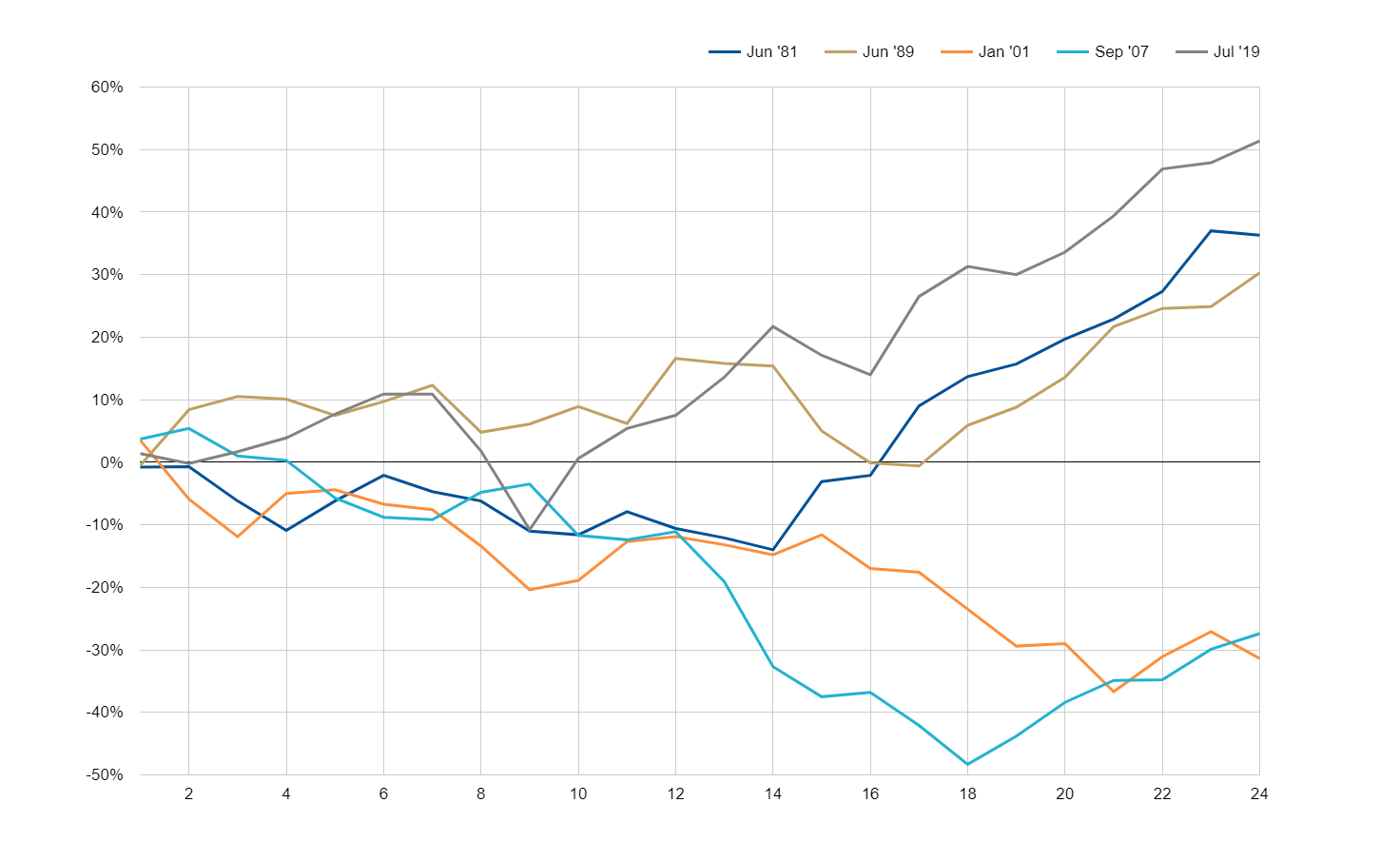
    Historical data shows that US stocks, as tracked by the S&P 500, have often performed well in the months following the Fed’s first rate cut. However, this depends on the health of the economy as a whole. Figure 1 shows examples of both scenarios, illustrating the performance of the US stock market following Fed rate cuts.

    The goal of rate cuts is to boost or sustain economic growth by lowering the price of borrowing and encouraging spending. Oftentimes this results in a boost to the stock market, however, as we saw after the dot-com bubble and the 2008 financial crisis, that’s far from a certain outcome.


    Figure 1

    S&P 500 RETURNS
    24 months following the start of Fed rate cutting cycles

    Line chart: S&P 500 returns in the 24 months after the start of five Federal Reserve rate-cutting cycles (June 1981, June 1989, January 2001, September 2007, July 2019)

    MONTHS FOLLOWING THE FIRST CUT


    CASH
    While cash is typically regarded as the safest type of investment, holding cash in a falling interest rate environment can lead to significant opportunity costs. When interest rates are low or declining, the real returns on cash, adjusted for inflation, can often be negative, which diminishes purchasing power over time.

    As cash returns diminish, many investors and savers may find it necessary to seek higher returns by moving into riskier assets. This shift often involves investing in securities like bonds and stocks to help meet their financial objectives.

    REAL ESTATE
    Lower interest rates generally benefit the real estate market by reducing borrowing costs for both homeowners and developers. With cheaper financing, demand for residential and commercial properties typically increases, which drives up property values. For property investors, these lower costs can lead to higher profits.

    However, falling rates can be a double-edged sword for real estate investors. While lower rates can boost property values and income, they can also lead to increased competition, as more buyers are drawn to the market.

    FINAL THOUGHTS
    The Federal Reserve’s interest rate cuts have broad effects across financial markets. Typically, falling rates benefit bonds and real estate while also creating opportunities in the stock market, especially for small-cap companies and cyclical industries. However, rate cuts often coincide with periods of uncertainty and volatility. To manage these fluctuations, investors should focus on diversification and long-term strategies that mitigate risks and capitalize on the opportunities present in a low-rate environment.

    THE BENEFITS OF
    INTERNATIONAL DIVERSIFICATION

    Investing in stock markets across the globe offers exposure to a broader range of economies, industries, and sectors than are found in the US market alone. As the saying goes, however, there’s no such thing as a free lunch. The diversification that’s provided by investing internationally often helps over the long term, but there’s no guarantee that these benefits will materialize in any specific period.

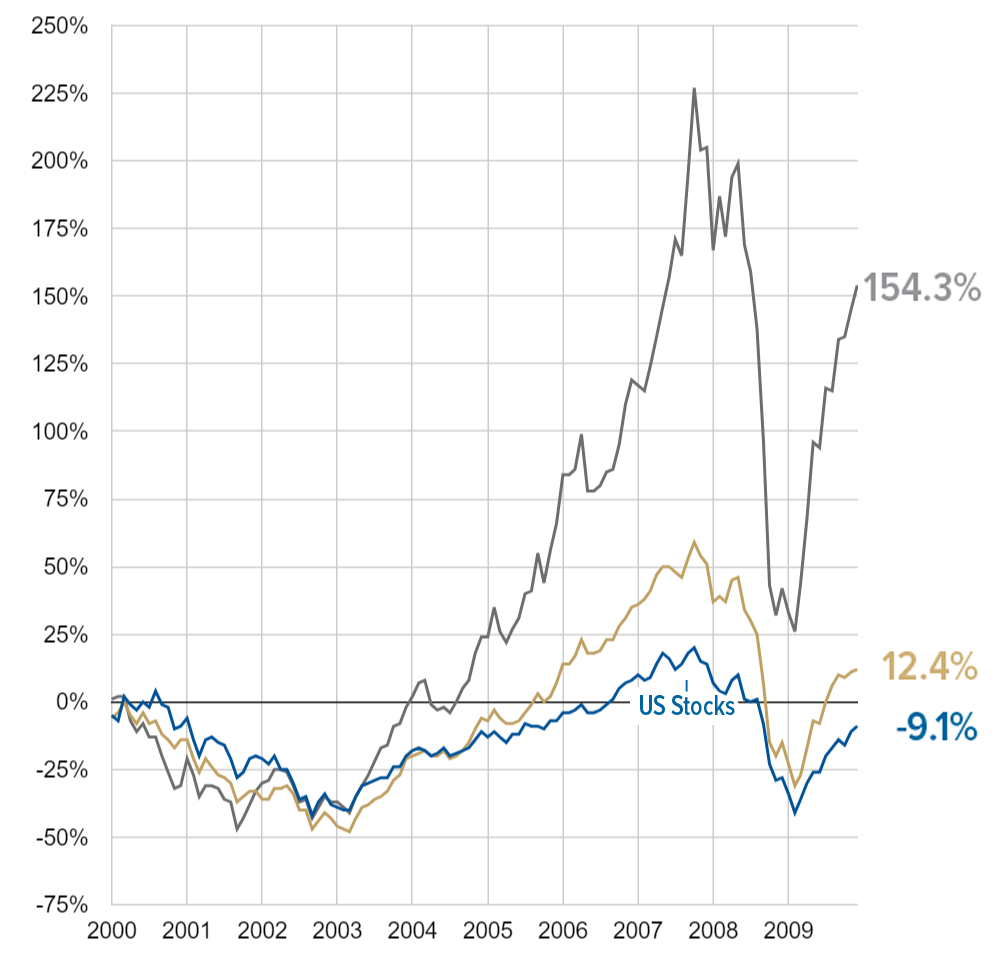
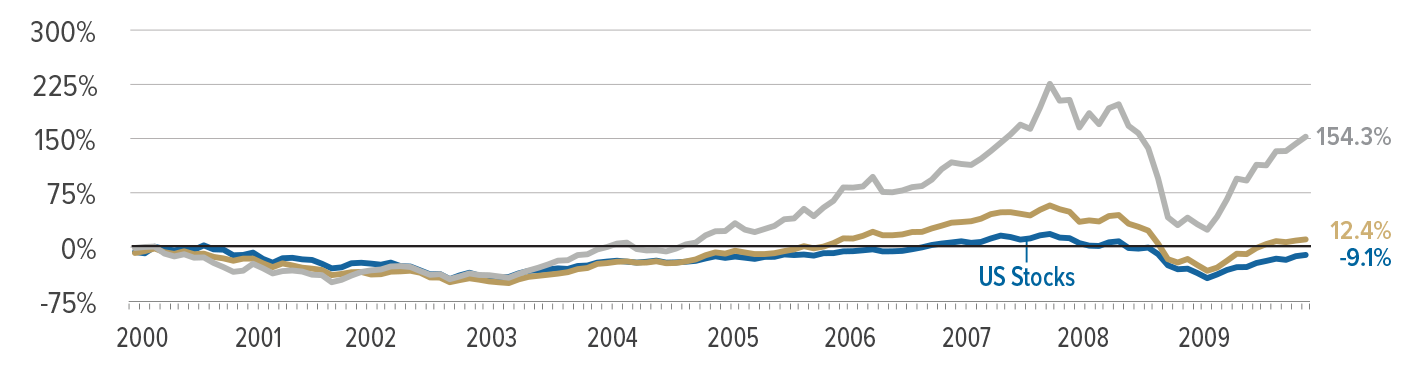
    A striking example of a period of time when international diversification helped tremendously was during what is often called “the lost decade” for US equities. Pictured in Figure 2, US stocks generated virtually no returns during this ten year stretch from 2000 through 2009, while international markets delivered solid gains. A portfolio consisting only of domestic US equities during this time period would’ve suffered heavily.

    In addition to the diversification provided by investing in the largest international developed countries, emerging markets offer access to fast-growing economies that tend to have lower correlations with the US market. Although emerging markets can be more volatile, they also have the potential for higher returns, which, when combined with US and international developed stocks, can help reduce overall portfolio risk.

    These diversification benefits can come with a price tag from time to time, however. For the ten years ending September 30th, the US has outperformed International Developed and Emerging Markets indices. Much of this underperformance can be attributed to the dominance of US mega-cap technology stocks, such as the Magnificent 7, which have driven much of the US market’s growth.

    Despite the recent lag in International and Emerging Market stock performance, they remain vital components of a well-diversified portfolio. By maintaining exposure to a broad range of markets, investors can better navigate periods of US market underperformance and benefit from the growth of economies outside the US.

    Figure 2

    THE LOST DECADE
    January 2000-December 2009

    Fortune logo

    By David Booth
    June 24, 2024

    David Booth is the founder and chairman of Dimensional Fund Advisors. This article is not intended as investment advice.


    Two men on trading floor
    Traders work on the floor of the New York Stock Exchange (NYSE) on June 18 after the S&P500 and Nasdaq closed at record highs the previous day. SPENCER PLATTE-GETTY IMAGES

    Given all that is going on in the world, investors have questions. Will the Federal Reserve cut interest rates, and if so, by how much? Who will win the U.S. presidential election, and will it impact markets? How will global events affect my family and finances? A lot remains uncertain, which can naturally make investors uneasy.

    For many people, uncertainty is something to avoid or at least mitigate. People often talk more about the downside to uncertainty than its upside. There’s even a term, loss aversion, that reflects how a loss can feel more painful than a gain of an equal amount can feel rewarding.

    However, I have a different view: Uncertainty is underrated. Without it, there would be no surprises, no joy in watching sports, and no 10% average annualized return on the stock market over the past century.

    All investments involve risk—there is no guarantee of success. Investors can be rewarded for taking on the risk of not knowing exactly how things will play out. If there was no uncertainty, returns would be predictable and there would be no difference between putting your money in a savings account and investing it in the stock market.

    Th ink back to the beginning of the pandemic. At the end of March 2020, the S&P 500 Index was down nearly 20% for the year. Yet investors who stayed in the market were rewarded. At the end of 2020, the S&P 500 Index was up 18.4% for the year, a 38% turnaround from its March lows. March 2020 was a scary time for almost everyone. No one knew what was going to happen. Yet even in those dark moments, I had faith in human ingenuity. When people are met with challenges, they are resilient and work to solve them. Companies are no different. Investing in the stock market means investing in the power of human ingenuity to adapt and innovate.

    Because of uncertainty, life is one cost benefit analysis aft er another, and we have no choice but to manage risk. At the extremes, some people may try to completely ignore risk, while others might try to eliminate it. Most of us fall somewhere in the middle.

    We manage risk with our health, work, family, and just about every other aspect of our lives—including investing—because while few things are certain, we still have to make decisions big and small. For example, we can’t control the weather, but we can carry an umbrella if it looks like it might rain. And while we can’t predict stock market returns, we can manage the risk in our investment portfolios.

    What to avoid

    One way of managing risk is to eliminate some of the things you shouldn’t do. When you want to improve your health, you might eliminate fried foods, soda, and sweets from your diet, which can increase your chance of a healthier outcome. It’s the same with investing. Eliminate bad habits, like attempting to predict the unpredictable by trying to time the market or pick winning stocks.

    Think of everything that has happened in the past 25 years, including:

    • The dot-com bubble.
    • 9/11.
    • The Global Financial Crisis
      and Great Recession.
    • The COVID-19 pandemic.


    It would be natural to want to time when to exit and re-enter the market. To put the implications of doing so into perspective, consider a hypothetical $1,000 investment in the Russell 3000 Index made at the beginning of 1999. This turns into $6,449 for the 25 years ending Dec. 31, 2023. Over that same period, if you missed the Russell 3000’s best week, which ended Nov. 28, 2008, the value shrinks to $5,382. Miss the three best months, which ended Jun. 22, 2020, and the total return dwindles to $4,546. See what I mean?

    What to do

    Positive ways of dealing with risk can help you potentially capture the benefits of what scientific research has shown us. With health, that means exercising more, getting regular checkups, and eating more fruits and vegetables. With investing, that means ensuring our portfolios are diversified across regions and asset classes. While it doesn’t guarantee making a profit or averting a loss, diversification allows us to reduce our risk while potentially capturing the returns of the market.

    Since we know risk is unavoidable—and it’s the source of investment returns—you want to find the amount of risk that is right for you. For example, Treasury bills are considered a relatively safe investing asset whose prices don’t fluctuate as much as stock prices. However, Treasurys have provided, on average, a lower return than the stock market. Those tradeoffs can be weighed against your specific needs and preferences, and it’s always good to be prepared for a range of outcomes. The more committed you are to a philosophy and a plan you can count on when you are experiencing the ups and downs of uncertainty, the more likely you are to succeed as a long-term investor.

    You are already better at this than you think.

    You know more about investing than you think you do, because investing is all about risk and reward, just like every other part of your life. In investing and in life, some years are better than others, but the important thing is to be able to persevere so you’re ready for what comes next. That’s why I see uncertainty as a positive force and have faith in the ability of people to find better ways to manage risk. I’ve worked with thousands of investors during my five decades in finance and seen how, when they manage risk better, they live a better life. Instead of trying to predict your future, plan, adapt, and figure out the most sensible solutions for you.

    You may not only be underestimating uncertainty—you may also be underestimating the positive impact of embracing it.

    Disclosures: Past performance is no guarantee of future results. Exhibits are for illustrative purposes only.
    Figure 1: S&P 500 returns begin using the month of returns listed and continue for 24 consecutive months.
    Figure 2: Emerging Market Stocks = MSCI Emerging Markets Index (net div.), International Developed Stocks = MSCI EAFE Index (net div.), US Stocks = S&P 500 Index

  • 2nd Quarter 2024

    OUR QUARTERLY NEWSLETTER TO CLIENTS AND FRIENDS OF THE FIRM

    SECOND QUARTER 2024


    Portfolio Concentration & Biases

    This year’s numerous all-time highs in the S&P 500 are largely driven by NVIDIA, which alone accounts for nearly one third of the index’s performance in the first half of 2024. Adding Microsoft, Amazon, Meta (Facebook), and Eli Lilly into the mix covers over half of the index’s strong performance.

    While it may be tempting to invest heavily in these standout performers, concentrating your investments in a few stocks can be extremely risky. I’ve summarized a few of my favorite studies highlighting these risks in Figure 1. On the other hand diversifying your portfolio helps mitigate the risks associated with betting on one or even a few stocks.

    Figure 1

    STUDIES ON STOCK CONCENTRATION

    Singled Out: Historical Performance
    of Individual Stocks 1927-2020
    By Bryan Ting and Wes Crill

    Ting and Crill found that only about 20% of stocks outperformed the market over 20 years. Stocks are prone to delisting and decline even if they have performed well historically. Their study confirms that past performance does not reliably predict future success, with winners having no better chance of continued outperformance than losers.

    Underperformance of Concentrated
    Stock Positions 1926-2022
    By Antti Petajisto

    Individual stocks underperformed the market by a median of -7.9% over ten years. The stocks that were recent top performers did even worse. The study highlights that the odds of a concentrated position outperforming the market are slim, especially if the stock has performed exceptionally well recently.

    The Capitalism Distribution 1983-2007
    By Longboard Asset Management

    Out of the top 3,000 stocks in the US, 39% lost money, and 19% saw losses exceeding 75%. Additionally, 64% underperformed the Russell 3000 Index. This highlights the inherent risk of relying heavily on a single stock: the chance of significant loss is high.

    Wealth Creation in the US Public
    Stock Markets 1926-2019
    By Hendrik Bessembinder

    This study’s findings reveal that while a few high-performing stocks generate significant market returns, nearly 60% of stocks diminish shareholder wealth. Most importantly, only 4% of stocks outperformed Treasury bills, and fewer than 1% of stocks were responsible for over half of the wealth creation. This skewed distribution means that the odds of a single stock delivering exceptional returns are slim.

    Although everyone knows, and the evidence supports, that diversification is a good idea in theory, it’s worth taking a look at why it is often brushed aside in practice. There are several behavioral biases that we as human beings exhibit, and these go a long way towards explaining this departure.

    1. FAMILIARITY BIAS

    Investors overestimate the safety of familiar stocks, such companies that have been regularly highlighted in the press. This overconfidence often leads to underestimation of the risks involved.

    2. RECENCY BIAS

    This bias also plays a role, where investors are influenced by recent strong performance and project these results into the future. This can result in buying or continuing to hold onto a stock based on its past performance, even if current valuations are high and future returns are uncertain.

    3. ANCHORING BIAS

    When investors irrationally hold assets based on their initial purchase price, rather than evaluating the current value of the investment.

    4. CONFIRMATION BIAS

    This is one we’ve all heard of before, but in investing this occurs when individuals ignore negative news about a stock and only pay attention to information that supports their views.

    5. HERD MENTALITY BIAS

    Essentially the tendency to follow the crowd. Investors tend to feel more confident when purchasing securities that all their friends or the media are discussing. This tends to work great on the way up, but not so much on the way down.

    All these biases above can combine and contribute to concentrated portfolios. In contrast, diversification is often described as the only “free lunch” in investing. By spreading investments across a range of assets and recognizing our own human biases, investors not only reduce risk but also enhance the chances of achieving better long-term returns.

    NEW TAX SAVING STRATEGY

    While both death and taxes remain inevitable, our new tax-saving strategy can help delay at least one. We have been using individual stock portfolios to aggressively harvest tax losses for some 20 years (the strategy has just recently made its way to the mass market under the moniker “Direct Indexing”). Our new Flex strategy, which we began to roll out at the beginning of this year, represents the latest and most advanced effort to maximize after-tax returns. Unlike previous strategies that involve swapping stocks when they fall below their original cost basis, Flex takes tax loss harvesting to a whole new level.

    By using margin and shorting (which may sound intimidating), we buy favorable stocks and short less favorable stocks. Definitionally, we benefit when stocks we’re long go up in price and when stocks we’re short go down in price. Thus, we’re able to capture losses whether stocks go up or down and later use them to offset capital gains which reduces our ultimate tax bill.

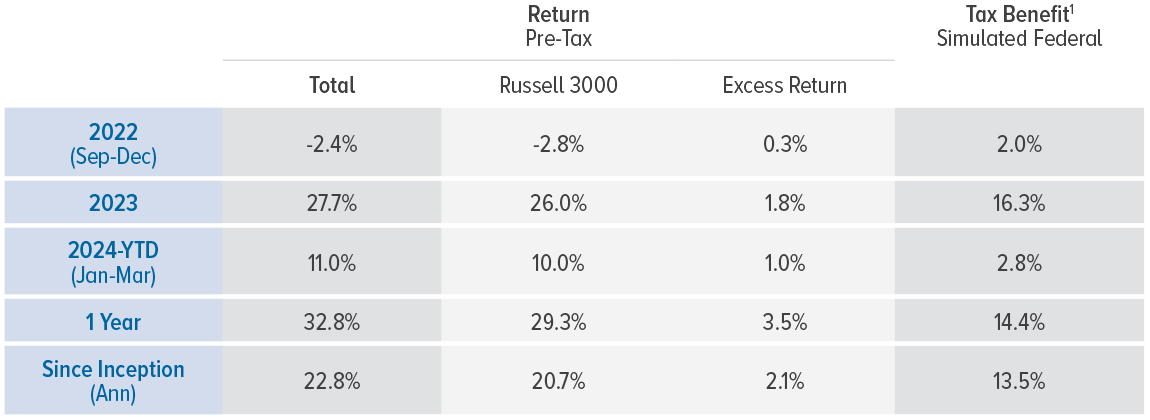
    Figure 2 compares the live results of this strategy to the target US market return of the Russell 3000 and even shows the tax benefits. Results will vary, but Flex can significantly benefit clients with liquidity events (think the sale of a company or property), minimize portfolio capital gains taxes, and enhance the effectiveness of charitable giving. Although this strategy is not appropriate for all clients, in the right situation it’s designed to significantly reduce yearly tax bills.

    Figure 2

    DESIGNED TO PERFORM BEFORE AND AFTER TAXES
    Flex 145 All Cap Equity Composite Net of Fee Performance, as of March 31, 2024

    Understanding the best way to tap your IRAs and other accounts
    can help you preserve your savings and lower your tax bill.

    By Sandra Block
    June 19, 2024

    One of the upsides of retirement is that for the first time in years, you have control over your time. If you want to spend the afternoon watching Bonanza reruns, well, no one is going to stop you.

    Retirement also gives you more command over your money. While you’re working, you have limited control over how often or how much you’re paid, which limits your ability to lower your taxes. But if you’re drawing retirement income from a combination of different types of accounts, you can control not only the amount you withdraw but also the sources of those withdrawals — and that could have a big impact on your taxes now and in the future.

    Conventional wisdom has long held that retirees should take money from their taxable brokerage accounts first, followed by traditional IRAs and other tax-deferred accounts, with Roth IRAs and Roth 401(k)s coming last. The logic behind this strategy is that it gives your tax-advantaged accounts more time to grow. Money in tax-deferred accounts isn’t taxed until you take withdrawals, and withdrawals from a Roth are tax-free as long as you’re 59 1/2 or older and have owned the account for at least five years.

    But in recent years, some retirement experts have questioned whether this is the most effective way to lower taxes on your retirement income and preserve your savings for your later years. Postponing withdrawals from your tax-deferred accounts could eventually lead to large, taxable required minimum distributions (RMDs currently start at age 73).

    And since those withdrawals are taxed at ordinary income tax rates, which range from 10% to 37%, large distributions could push you into a higher tax bracket and trigger Medicare high-income surcharges, says Wade Pfau, professor of retirement income at the American College of Financial Services and author of Retirement Planning Guidebook: Navigating the Important Decisions for Retirement Success.

    Roger Young, a certified financial planner and thought leadership director for T. Rowe Price, agrees. The conventional withdrawal sequence “bunches a lot of taxable income in the middle period, where pretty much all of your income is taxable,” he says.

    Retirees who have a mix of accounts could generate income more tax-efficiently by withdrawing from a combination of taxable and tax-deferred accounts, as well as making strategic conversions to Roth accounts, while remaining in a low tax bracket, Pfau says. One way to accomplish this goal is to withdraw enough from your taxable accounts to cover spending needs and income taxes. After that, calculate how much you can withdraw from your tax-deferred accounts and convert to a Roth while remaining within your desired tax bracket.

    In 2024, a married couple who fi les jointly can have up to $94,300 in taxable income and fall within the 12% tax bracket; for singles, the cutoff is $47,150. These thresholds are close to the points at which taxpayers can qualify for a 0% tax rate on long- term capital gains and qualified dividends (assets held for more than a year are subject to rates for long-term gains). In 2024, the 0% rate applies to capital gains and qualified dividends for singles with taxable income up to $47,025 and married couples with joint taxable income up to $94,050.

    Taking strategic withdrawals from a mix of taxable and tax-deferred accounts while remaining within these thresholds provides two benefits. You’ll pay taxes on your tax-deferred withdrawals at a low rate and reduce the size of those accounts, which will shrink your RMDs. You may also qualify for the 0% capital gains rate on income from your taxable accounts.

    Meanwhile, you’ll pay taxes on conversions from a traditional IRA to a Roth at a low rate, which will increase the amount of tax-free income you’ll have available in later years. Ideally, you should use assets from your brokerage or other taxable accounts to pay taxes on the conversions, Pfau says.

    If you postpone Roth conversions until you’ve depleted those accounts, you may have to use funds from your IRA to pay the tax bill. That’s not the end of the world, he says, because you’ll still benefit from having future tax-free income (and if you’re 59 1/2 or older, you won’t pay a 10% early-withdrawal penalty on those distributions). But it reduces the amount of money you’ll be able to invest in the Roth.

    Taxes on Social Security

    Converting funds in your traditional IRAs to a Roth can help reduce your taxable income later in life because, ideally, a large percentage of your withdrawals will come from your Roth. This will help you avoid what Pfau calls the Social Security “tax torpedo,” which occurs when up to 85% of your benefits are taxed.

    The formula for calculating tax on Social Security benefits is based on what Social Security defines as your provisional income (sometimes referred to as combined income), which is based on half of your Social Security benefits, plus other sources that contribute to your adjusted gross income, including withdrawals from traditional tax-deferred accounts; dividends, interest and capital gains from taxable investment accounts; and interest from municipal bonds.

    If your provisional income ranges from $25,000 to $34,000 for single filers, or $32,000 to $44,000 for joint filers, up to 50% of your benefits will be taxable. If your provisional income is more than $34,000, or $44,000 for joint filers, up to 85% of your benefits will be taxable.

    These thresholds aren’t adjusted for inflation, which means the percentage of retirees who pay taxes on their benefits has increased dramatically since the tax was signed into law more than 30 years ago. More than half of retirees pay taxes on a portion of their Social Security benefits, according to the Center for Retirement Research at Boston College.

    Withdrawals from a Roth aren’t included in your provisional income, so increasing the size of your Roth accounts through strategic conversions can help lower taxes on your benefits. If you’re able to delay filing for Social Security until age 70, which will maximize the amount of your monthly payouts, you’ll have more time to reduce the size of your tax-deferred accounts and convert some of your funds to a Roth, T. Rowe Price’s Young says.

    Charitable Giving

    If you plan to give funds in your tax-deferred accounts to charity, you may not need to accelerate certain withdrawals as much as you would otherwise.

    One strategy that can reduce your RMDs — and your tax bill — is to make qualified charitable distributions (QCDs), which are donations made directly from your IRA to qualified charities. You can make a QCD as early as age 70 1/2, but when you reach the age at which you’re required to take distributions, the charitable distribution will count toward your RMD.

    Although a QCD isn’t deductible, it will reduce your adjusted gross income, which will in turn reduce the provisional income used to calculate taxes on your Social Security benefits. In 2024, you can donate up to $105,000 directly from your IRA to a qualified charity.

    Alternatively, if you’re worried about giving away money you may need for long-term care or other late-in-life expenses, you can leave funds in your IRA to charity. The charity won’t have to pay taxes on the money, and you can leave more tax-friendly assets to your heirs. But this won’t absolve you from taking RMDs and paying taxes on those withdrawals while you’re still alive.

    Your Estate and Taxes

    Shifting more of your assets to Roth accounts won’t just lower your taxes in your later years. It could also benefit your heirs if they end up inheriting money in those accounts.

    Under the SECURE Act of 2019, most adult children and other non-spouse heirs who inherit a traditional IRA or other tax- deferred account from an owner who died on or after January 1, 2020, have two options: Take a lump sum and pay taxes on the entire amount, or transfer it to an inherited IRA and deplete the account within 10 years of the death of the original owner.

    Depending on whether the original owner was taking RMDs when he or she died, the heirs may also have to take yearly withdrawals based on their life expectancy, which could mean paying taxes during their highest-earning years. (Spouses still have the option of rolling inherited IRAs into their own IRAs.) Because of confusion about the rules, the IRS has waived the RMD requirement for non-spouse heirs the past few years and is doing so again for 2024.

    The 10-year rule also applies to inherited Roth IRAs, but heirs aren’t required to pay taxes on the withdrawals or to take RMDs. That gives them plenty of flexibility, including the ability to wait until year 10 to deplete the account, thereby taking advantage of more than a decade of tax-free growth.

    If you have a large brokerage account with significant appreciation, you may want to consider preserving some of those assets for your heirs. Under current tax law, inherited investments receive a “step-up” in their cost basis to the current fair market value when the original owner dies. If your heirs turn around and sell those investments right away, they won’t pay tax on any gains, no matter how much the investments have increased in value since you purchased them.

    Note: This item first appeared in Kiplinger Personal Finance Magazine, a monthly, trustworthy source of advice and guidance.

    Disclosures: Past performance is no guarantee of future results.

    1 The tax benefit liability is calculated using a pre-liquidation calculation methodology reflecting the impact of realized tax outcomes. It is calculated as the difference between the geometrically annualized monthly after-tax returns and similarly calculated pre-tax returns reflecting an assumed monthly reinvestment of tax benefits (liabilities) into (out of) the portfolio. The calculation methodology only considers federal tax rates (assumes -40.8% for short term capital gains/losses and ordinary income/expense and -23.8% for long-term capital gains/losses and qualified divided income) and excludes the potential state tax benefit (liability). Potential Federal tax benefit and after-tax returns are for illustrative purposes only and may not reflect all taxes that an investor would incur.

    Figure 2 Sources: AQR, Bloomberg. XpressFeed, Barra. Performance data is estimated and subject to change. Past performance is not a guarantee of future performance. Unaudited net returns shown in USD. Flex 145 All Cap Equity – formerly Flexible SMA – Beta 1 Low TE US All Cap Equity – formerly Enhanced Direct Indexing – Tax Aware US All Cap Equity Composite net performance calculated based on 0.4% model mgmt. fee, per annum. Other discretionary portfolios that trade similar securities and/or strategies as those portfolios included in this composite, but do not meet this composite’s strategy criteria, are excluded from this composite and reside in one or more separate composites, which are available upon request. The GIPS Composite Reports for FLex 145 All Cap Equity Composite can be found in Disclosures.

  • 1st Quarter 2024

    OUR QUARTERLY NEWSLETTER TO CLIENTS AND FRIENDS OF THE FIRM

    FIRST QUARTER 2024


    Markets Thrive Amidst Uncertainty

    What a remarkable start to the year it has been for US stocks! Despite facing significant challenges with inflation, interest rates, oil prices, and even geopolitical conflict, the S&P 500 notched its largest first-quarter gain since 2019. Even as Germany, Japan, and England risk slipping into recession, the S&P 500 has continued to climb higher. Factors contributing to this resilience can be viewed from two perspectives: specific company-level developments and broader economic trends.

    At the company level, there was continued investor enthusiasm for the potential of generative artificial intelligence. Investors increasingly recognized the transformative impact of this technology, driving optimism about long-term productivity gains.

    On a broader economic scale, the rally’s expansion was fueled by factors such as US economic strength, the Federal Reserve’s accommodative monetary policy stance, and the pause in interest rate hikes. With the growth of the US economy outpacing many others in 2023, confidence in US economic exceptionalism soared and fueled further market gains. All this combined with Fed Chair Jerome Powell’s reassurance that the inflation outlook remained largely unchanged, despite temporary spikes, has also helped ease concerns among investors.

    The resilience of US stocks in the face of global challenges underscores the complexity and opacity of market dynamics. A diversified, long-term approach to investing designed to weather all markets has been and will continue to be the Ariadne way.

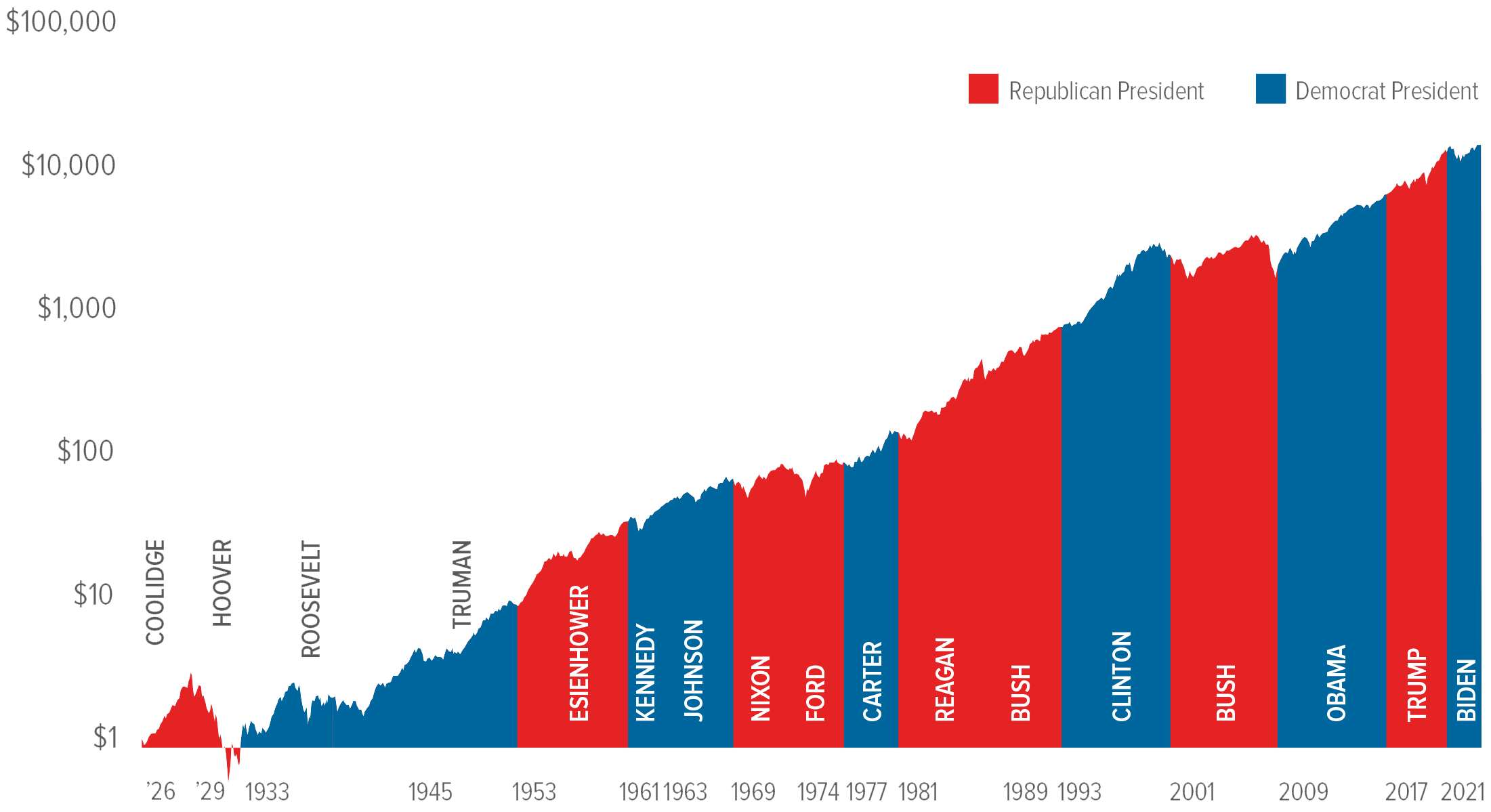
    Politics and economic prosperity are much less connected than the press might have you believe. As the 2024 presidential election looms large, investors often contemplate its potential impact on financial markets.

    As with every investment, it’s useful to take a look at the historical data. Analysis reveals a compelling pattern: the S&P 500 has delivered positive annual returns in 20 out of 24 presidential election years from 1932 through 2020. As seen in Figure 1, regardless of the political affiliation of the incoming administration, markets have historically rewarded disciplined investors over the long term, underscoring the disconnect between political party and investment performance.

    While the political landscape may shift, the fundamentals of sound investing remain steadfast. Rather than being swayed by short-term fluctuations, investors are encouraged to adopt a rational approach, anchored in empirical evidence. As the countdown to November 5 begins, let us remain constant in our knowledge that whichever party presides over the Capitol, markets will continue to function as they always have.

    Does Debt Matter?

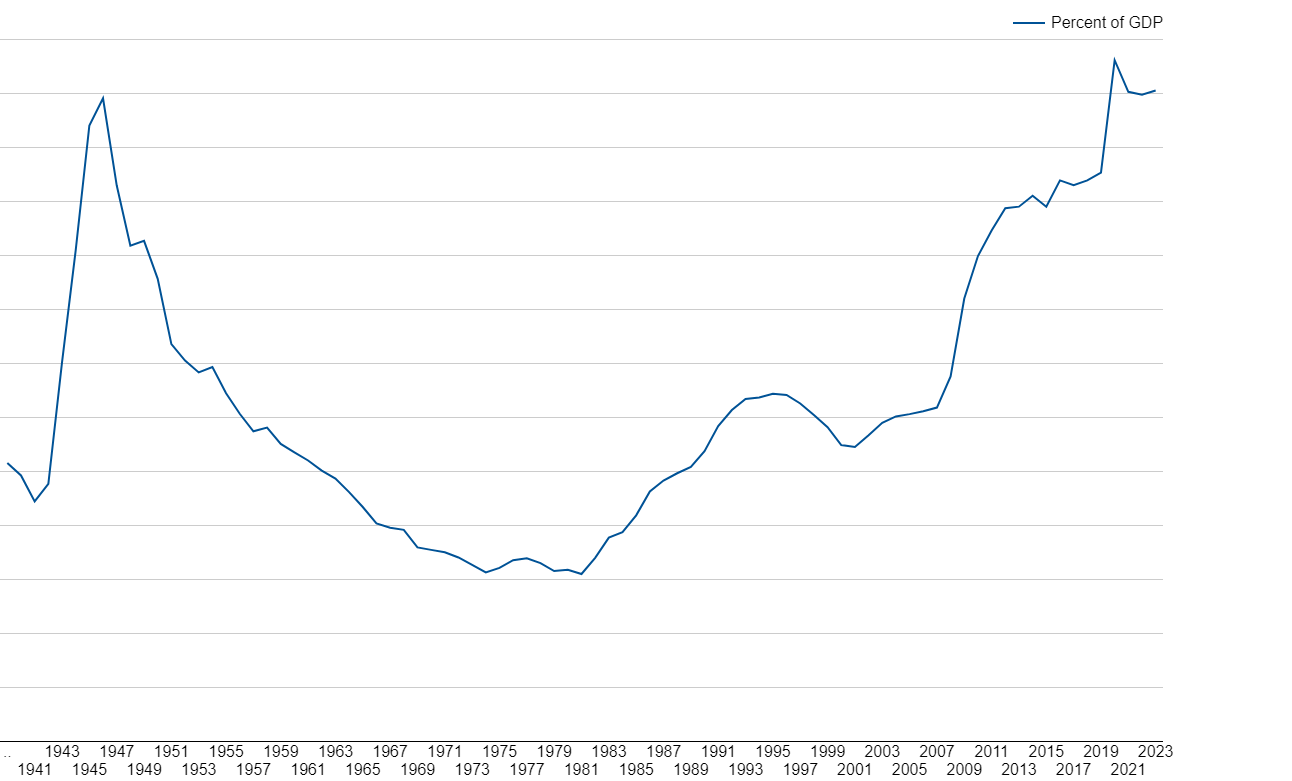
    The US debt-to-GDP ratio has become an everyday topic in economic discussions. When interpreting this ratio, a higher number means that a country has taken on more debt relative to its Gross Domestic Product, a measure of how productive an economy is. As seen in Figure 2, the US debt as a percentage of GDP is higher than any point in history.

    While it might seem intuitive that increasing debt burdens could hinder market growth, historical analyses reveal an uncertain correlation between the debt-to-GDP ratio and stock returns. Multiple factors such as interest rates, economic growth trajectories, governmental policies, and market sentiment all play a role as well.

    Counterintuitively, Modern Monetary Theory (MMT) argues that countries can manage large deficits without dire consequences, emphasizing the importance of controlling inflation over fixating on debt levels. This theory has stirred heated debate, challenging the prevailing belief that high government debt is inherently harmful. Critics of MMT raise concerns about the risks of unchecked government spending, warning of potential inflationary pressures, currency devaluation, and economic instability.

    A recent example when these concerns came to a head was in October 2022 when UK Prime Minister Liz Truss implemented a cavalier approach to her country’s debt. Under her leadership, the UK saw its debt-to-GDP ratio surge, leading to record-low values for the Pound and causing borrowing costs to spike. Amid fears of economic chaos, Truss’s popularity plummeted, culminating in her resignation after just seven weeks in office. Clearly, not everyone agrees that MMT is the way forward.

    Whether a nation’s debt truly matters or not is still a matter of debate, but here at Ariadne our portfolios are crafted to adapt to either case.

    Line chart: gross federal debt as a percent of gross domestic product, annual, 1939 to 2023

    By Hersh Shefrin
    April 8, 2024

    The late psychologist Daniel Kahneman had an important message for investors, analysts, and economists: Be careful when you treat the market as if it were a person.

    Kahneman, who passed away this past March, was a Nobel laureate in economics. He received the accolade in 2002. That year, he also
    gave a presentation at Northwestern University, and discussed investors’ tendency to personify the market. Below are excerpts from that event.

    Kahneman: Does The Market Have A Psychology?

    This talk is meant to be about psychology and the market.

    If you listen to financial analysts on the radio or on TV, you quickly learn that the market has a psychology. Indeed, it has a character. It has thoughts, beliefs, moods and sometimes stormy emotions.

    The main characteristic of the market is extreme nervousness. It is full of hope one moment and full of anxiety the next day. It often seems to be afraid of economic good news, which make it worry about inflation, but soothing words from the chair of the Fed make it feel better.

    The market is swayed by powerful emotions of like and dislike. For a while it likes one sector of the economy, but then it may become discouraged, suspicious, and even hostile.

    The market is generally quite active, but occasionally it stops to take a breather. And sometimes it catches its breath and takes profits. In short, the market closely resembles a stereotypical individual investor.

    Kahneman: What Accounts For The Tendency To View The Market As A Person?

    The tendency to ascribe states of mind to entities that don’t have a mind is a characteristic of an early phase of cognitive development, as when a child says that the sun sets because it is tired and going to bed. And we can recognize it in ourselves as grown-ups: when I play Snakes and Ladders, it is sometimes hard to avoid the impression that this green object is full of energy, whereas the yellow one is a bumbling mess that will never get anywhere.

    Why do adults engage in this kind of animistic thinking about the market? What does it do for them? I am arguing, of course, that this thinking happens automatically. But it also has a function, as a way of making sense of the past, which creates an illusion of intentionality and continuity. I am using intentionality here as philosophers do, to denote beliefs as well as desires.

    The personification fosters an illusion of predictability. The point is that intentional interpretations of behavior generate expectations of future behavior. And it is a psychological fact that the tendency to produce such expectations will persist indefinitely, even if they are reinforced on a strictly random schedule.

    Kahneman: Does The Theoretical End Justify The Theoretical Means?

    Analysts are not the only ones who think of the market as a person. People who write models with representative agents obviously do something of the same general kind. Some of my best friends have written such models.

    As a psychologist I have always liked these models, especially when they are written in a language I understand.

    But this is an instance in which my friends do something that they oppose and even ridicule in other contexts. They make assumptions that they know are not true, just because these assumptions help them reach conclusions that make sense.

    In fact, of course, agents are not all alike and the differences among them surely matter.

    Realism will be improved by having two types of agents, with different psychological makeups.

    Kahneman: How Do Institutional Investors and Individual Investors Compare?

    If I have time, I will speculate in a completely irresponsible fashion about possible similarities and differences between individual and institutional investors.

    We know from Terry Odean’s famous result that individual investors pay about 3.4% plus transaction costs whenever they have a significant idea about changing their portfolio. It seems plausible that there is someone on the other side of these transactions, and likely that these are institutions.

    Terry and Brad have begun to investigate some plausible hypotheses about differences in the trading behavior of individuals and institutions.

    They seem able to do very well without any real inspiration from psychology, but I think that an effort to find out which psychological principles that describe representative individuals also apply to representative institutional investors, is very worthwhile.

    I should report on preliminary results from research I undertook by taking Burt Malkiel to lunch. He actually does not believe that institutions are smarter than individuals. But this may not be the last word. For example, Burt could not answer my question about whether the disposition effect also applies to institutions.

    Conclusions:

    In his long career, Kahneman left much for us to ponder about financial vulnerabilities. The need for care when personifying the market is a case in point. He wanted us to realize that individual investors, institutional investors, analysts, and economists are all prone to the illusion of predictability.

    Disclosures: Past performance is no guarantee of future results
    Figure 2 Sources OMB; St. Louis Fed